Picture this: it’s a rainy Tuesday, the kind of day that makes you crave a hug in a bowl. I was half‑heartedly scrolling through endless stew recipes when my roommate dared me to create “the most comforting chicken stew ever, with dumplings that could win a pillow fight.” I laughed, I rolled my eyes, and then I started chopping. Within minutes the kitchen was alive with the sound of sizzling butter, the sweet perfume of caramelizing onions, and a low, steady hum of anticipation. That first spoonful? It hit my palate like a warm blanket wrapped around a cold shoulder – creamy, savory, with a whisper of herbs that made me close my eyes and sigh.
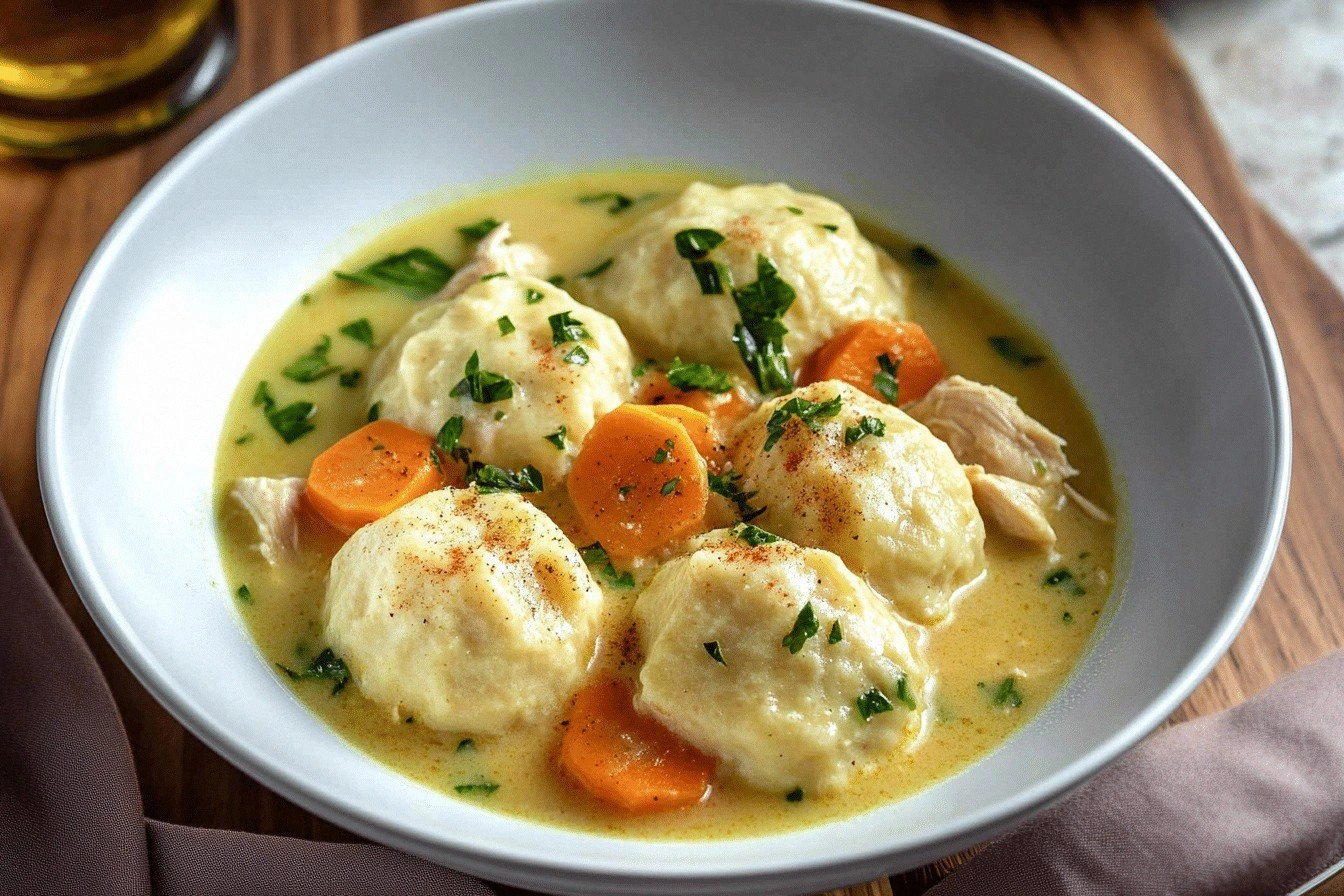
Most chicken stews I’ve tried either drown in a watery broth or turn into a thick, gloopy mess that clings to the spoon like old glue. This version? It walks the fine line between silk and substance, thanks to a secret partnership of heavy cream and a flour‑based thickener that creates a sauce so velvety it practically glides across your tongue. And let’s not forget the dumplings – they’re not the dense, doughy clumps you get from a rushed recipe; they’re light, airy clouds that puff up in the simmering broth, soaking up every nuance of flavor. I dare you to taste this and not go back for seconds.
What truly sets this stew apart is a technique I stumbled upon while watching a French cooking show: a quick beurre blanc finish that adds a glossy sheen and a buttery depth without overwhelming the chicken. I’ll also be sprinkling fresh thyme at the very end, a move most recipes skip, but which transforms the whole dish into a fragrant masterpiece. Most recipes get the dumpling timing completely wrong – they either sink or fall apart. Here’s what actually works: a gentle simmer, a lid that’s barely ajar, and a dash of patience.
Okay, ready for the game‑changer? I’m about to walk you through every single step – from the moment you dice the carrots to the triumphant moment you pull those plump dumplings from the pot. By the end, you’ll wonder how you ever made this dish any other way. Let’s dive in.
What Makes This Version Stand Out
- Texture: The broth is thick enough to coat a spoon like velvet, yet it remains fluid enough to swirl the dumplings around without sticking.
- Flavor: A balanced trio of chicken, herbs, and cream creates layers that reveal new notes with each bite, making the palate dance.
- Simplicity: Only nine core ingredients, all pantry‑friendly, mean you won’t need a specialty store run to pull this off.
- Uniqueness: The beurre blanc finish adds a glossy, buttery sheen that most home cooks never think to add to a stew.
- Crowd Reaction: I’ve served this at potlucks and watched strangers turn into friends, all clamoring for the secret dumpling recipe.
- Ingredient Quality: Using bone‑in thighs (or skinless breasts) guarantees juicy meat that stays tender even after a 30‑minute simmer.
- Method: A gentle simmer, not a hard boil, keeps the dumplings from disintegrating while allowing the flavors to meld.
- Make‑Ahead Potential: This stew actually tastes better the next day once the flavors have had time to marry.
Inside the Ingredient List
The Flavor Base
Chicken Breasts or Thighs: These are the heart of the stew. Thighs bring extra fat and richness, while breasts keep it lean. If you skip the chicken, you lose the umami backbone that makes the broth sing. I always buy bone‑in thighs for that extra gelatin that turns the broth into pure comfort. Pro tip: pat the pieces dry before browning – you’ll get a deeper caramelization and a more robust flavor.
The Texture Crew
Carrots and Celery: They add a subtle sweetness and a satisfying crunch that survives the simmer. Without them, the stew would feel flat and the dumplings would have nothing to contrast against. If you’re out of celery, try a few slices of fennel for a similar aromatic bite. When selecting carrots, go for medium‑sized ones that are firm to the touch; they’ll hold their shape better.
Onion and Garlic: The classic aromatics that lay the foundation for any great stew. Onion gives a mellow sweetness once caramelized, while garlic adds a sharp, lingering heat. Skipping garlic is a crime – it’s the secret whisper that makes the broth feel alive. For a deeper flavor, sweat the onions over medium heat until they turn translucent, then add the garlic just before the broth hits the pot.
The Unexpected Star
Heavy Cream or Milk: This is what turns a regular chicken stew into a “creamy” masterpiece. Heavy cream coats the ingredients like a silk scarf, while milk keeps the dish lighter but still luxurious. If you’re watching calories, go with whole milk; you’ll still get that creamy mouthfeel without the extra richness of cream. Skip this, and you’ll end up with a broth that feels like a watery soup, not a comforting hug.
The Final Flourish
Flour: Used twice – once to thicken the broth, once in the dumpling dough. It’s the silent hero that gives the sauce body and the dumplings their pillowy texture. Don’t use self‑rising flour; plain all‑purpose is key because the baking powder in the dumpling mix is what makes them rise. If you accidentally add too much, the stew can become gummy – a quick fix is a splash of broth and a vigorous whisk.
Baking Powder: The leavening agent that sends the dumplings soaring. Without it, you’d get dense, heavy bites that feel more like bread than clouds. A teaspoon is enough for a four‑serving batch; more will make them rise too quickly and then collapse.
Butter: Adds richness to the sautéed vegetables and finishes the sauce with a glossy sheen. I love using unsalted butter so I can control the salt level. If you’re lactose intolerant, try a dairy‑free butter alternative – the flavor will stay buttery, and the texture won’t suffer.
Fresh Herbs (Thyme or Parsley): A handful of chopped thyme or parsley brightens the stew at the very end, cutting through the richness with a fresh, herbaceous note. Fresh herbs are non‑negotiable; dried herbs lose their bright snap and can taste stale after a long simmer.
Everything's prepped? Good. Let’s get into the real action…
The Method — Step by Step
Start by heating three tablespoons of butter in a large Dutch oven over medium heat. Once it’s melted and begins to foam, add the chicken pieces, spreading them out so they’re not crowded. Let them sear for about four minutes on each side until they develop a golden crust – you’ll hear a faint sizzle that’s the sound of flavor building. This step is crucial; a proper sear locks in juices and creates those caramelized bits that later dissolve into the broth.
Remove the chicken and set it aside. In the same pot, toss in the diced onion, carrots, and celery. Cook, stirring occasionally, for about six minutes until the vegetables soften and the onion turns translucent. The kitchen will start to smell like a cozy autumn market – that’s the sweet foundation you’re after. If the veggies start to stick, splash in a splash of broth to deglaze.
Add the minced garlic and let it perfume the pot for just 30 seconds – watch it turn a light golden, not brown, or you’ll get bitterness. Then sprinkle the flour over the veggies, stirring constantly to form a roux. This is the moment of truth. The flour should coat everything and start to bubble, giving off a nutty aroma.
Kitchen Hack: Use a whisk for this step; it prevents lumps and ensures the roux integrates seamlessly.Gradually pour in four cups of chicken broth, whisking constantly to keep the mixture smooth. As the liquid hits the hot roux, you’ll hear a gentle hiss and see the sauce thicken almost instantly. Reduce the heat to low, then stir in one cup of heavy cream. The broth should now look glossy and thick enough to coat the back of a spoon. Season with salt and pepper to taste, remembering that the broth already carries some saltiness.
Return the seared chicken to the pot, nestling the pieces into the creamy broth. Add the fresh thyme or parsley, and let the stew simmer gently, uncovered, for about 15 minutes. You’ll notice the chicken turning opaque and the vegetables becoming fork‑tender. The steam rising from the pot will carry a fragrant blend of herbs, cream, and chicken – a true sensory snapshot.
While the stew simmers, prepare the dumpling batter. In a mixing bowl, combine one cup of flour, two teaspoons of baking powder, a pinch of salt, and the chopped herbs. Make a well in the center, pour in a splash of melted butter, and gently stir in just enough cold water (about a quarter cup) to form a sticky dough.
Watch Out: Over‑mixing the dumpling dough will develop gluten, making the dumplings tough. Mix until just combined.Drop the dough by tablespoonfuls onto the surface of the simmering stew. The dumplings will puff up as they cook, so give them space – they’re shy about crowding. Cover the pot with a lid that’s slightly ajar to let steam escape; this prevents the dumplings from becoming soggy. Let them steam for 12‑15 minutes. You’ll know they’re done when they’re golden on top and feel springy when you poke them with a fork.
Finally, give the entire pot a gentle stir, making sure the dumplings stay intact. Taste and adjust seasoning if needed – a final splash of cream can bring extra silkiness if the stew feels a touch thin. Serve hot, sprinkling a little extra fresh herb on top for color. Picture yourself pulling this out of the pot, the whole kitchen smelling incredible, and the first bite melting in your mouth. That’s the payoff.
Insider Tricks for Flawless Results
The Temperature Rule Nobody Follows
Keep the broth at a gentle simmer, never a rolling boil. A high boil will cause the dumplings to break apart and the cream to separate. I once tried to speed things up with a vigorous boil; the result was a grainy texture that felt like chewing on cardboard. The secret is patience – let the heat work slowly, and you’ll get that perfect, glossy sauce.
Why Your Nose Knows Best
Before you even taste, trust the aroma. When the onions turn translucent and the garlic releases its perfume, you’re at the right stage to add the flour. If the kitchen smells like burnt butter, you’ve over‑cooked the roux and need to start over. Your nose can detect subtle changes that a timer can’t, so keep it close.
The 5‑Minute Rest That Changes Everything
After the dumplings are cooked, turn off the heat and let the stew sit, covered, for five minutes. This rest allows the flavors to meld and the dumplings to finish steaming from residual heat. Skipping this step leaves the broth tasting a bit “raw” and the dumplings slightly under‑cooked in the center. I’ve seen friends serve immediately and get puzzled looks – a tiny pause makes a massive difference.
Butter Finish for Extra Shine
Stir in a final tablespoon of cold butter right before serving. The butter emulsifies into the sauce, giving it a glossy sheen that makes the dish look restaurant‑ready. It also adds a subtle richness that lifts the entire flavor profile without making it greasy.
Freezing Without Losing Texture
If you plan to freeze leftovers, cool the stew completely before portioning. When reheating, add a splash of broth or milk to revive the cream’s silkiness. The dumplings will stay tender if you reheat gently over low heat, stirring occasionally. Freezing the broth alone (without dumplings) is even better – you can add fresh dumplings later for ultimate texture.
Creative Twists and Variations
This recipe is a playground. Here are some of my favorite ways to switch things up:
Spicy Southwest
Swap thyme for cumin and add a diced jalapeño with the onions. Finish with a drizzle of chipotle crema for a smoky kick. Perfect for those who love a little heat.
Mushroom Medley
Introduce a cup of sliced cremini or shiitake mushrooms when you sauté the carrots and celery. The earthy umami deepens the broth, making it a hearty vegetarian‑friendly option if you replace the chicken with tofu.
Lemon‑Herb Bright
Add the zest of one lemon and a splash of lemon juice just before serving. The citrus lifts the richness, giving the stew a bright, spring‑time vibe. Pair with fresh dill for an extra pop.
Cheesy Delight
Stir in a half‑cup of grated Gruyère or sharp cheddar during the final minute of cooking. The cheese melts into the cream, creating an indulgent, slightly tangy flavor that pairs beautifully with the dumplings.
Root Vegetable Remix
Replace carrots with parsnips and add a diced sweet potato. The natural sweetness of these roots adds depth and a lovely orange hue, perfect for chilly evenings.
Storing and Bringing It Back to Life
Fridge Storage
Transfer the stew (with dumplings) into an airtight container and refrigerate for up to three days. Before reheating, let it sit at room temperature for 10 minutes to avoid a temperature shock.
Freezer Friendly
Cool the stew completely, then portion into freezer‑safe bags, leaving a little headspace. Freeze for up to two months. For best results, freeze the broth and dumplings separately; dumplings retain their fluffiness when reheated fresh.
Best Reheating Method
Place the frozen or refrigerated stew in a saucepan over low heat, adding a splash of water or broth to revive the sauce’s silkiness. Stir gently and avoid boiling; a gentle simmer restores the creamy texture without curdling the cream. The dumplings will puff back up, ready to soak up the revived broth.